Published by Mike Brewer's imprint, Canned Planet, Concrete Catwalk captures the irreplicable looks of Manhattan's streets.
By Amanda Chemeche
Photos by Tessa Gourin
Published
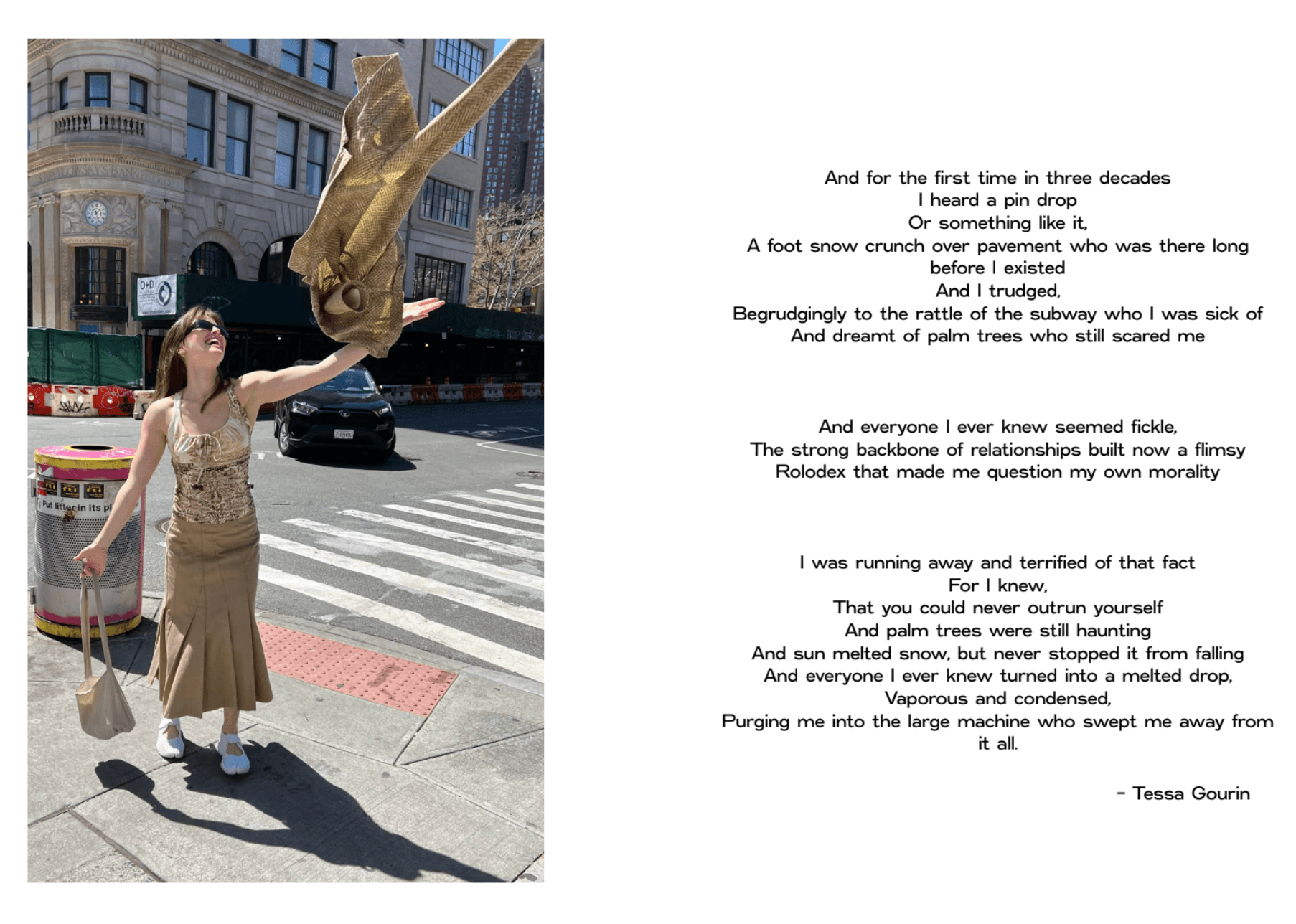
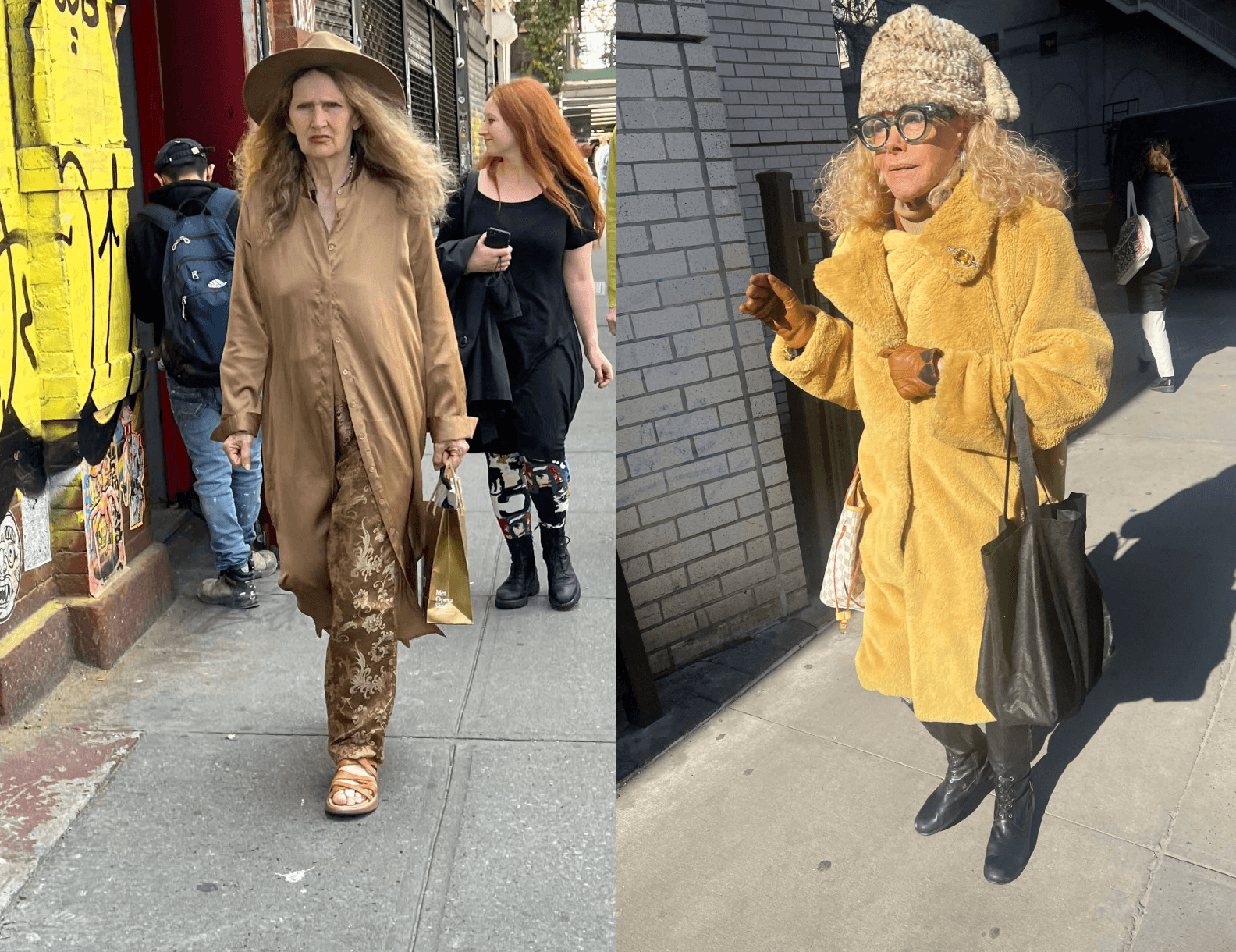
The first thing you notice in Concrete Catwalk is not fashion exactly, but commitment: to a color, a coat, a shape, or a way of moving through New York. These outfits came with a worldview. Photographer Tessa Gourin’s book, published by Michael Brewer through Canned Planet, the independent Brooklyn press he founded and runs, catches people in the middle of ordinary city life and makes their self-presentation feel briefly monumental.
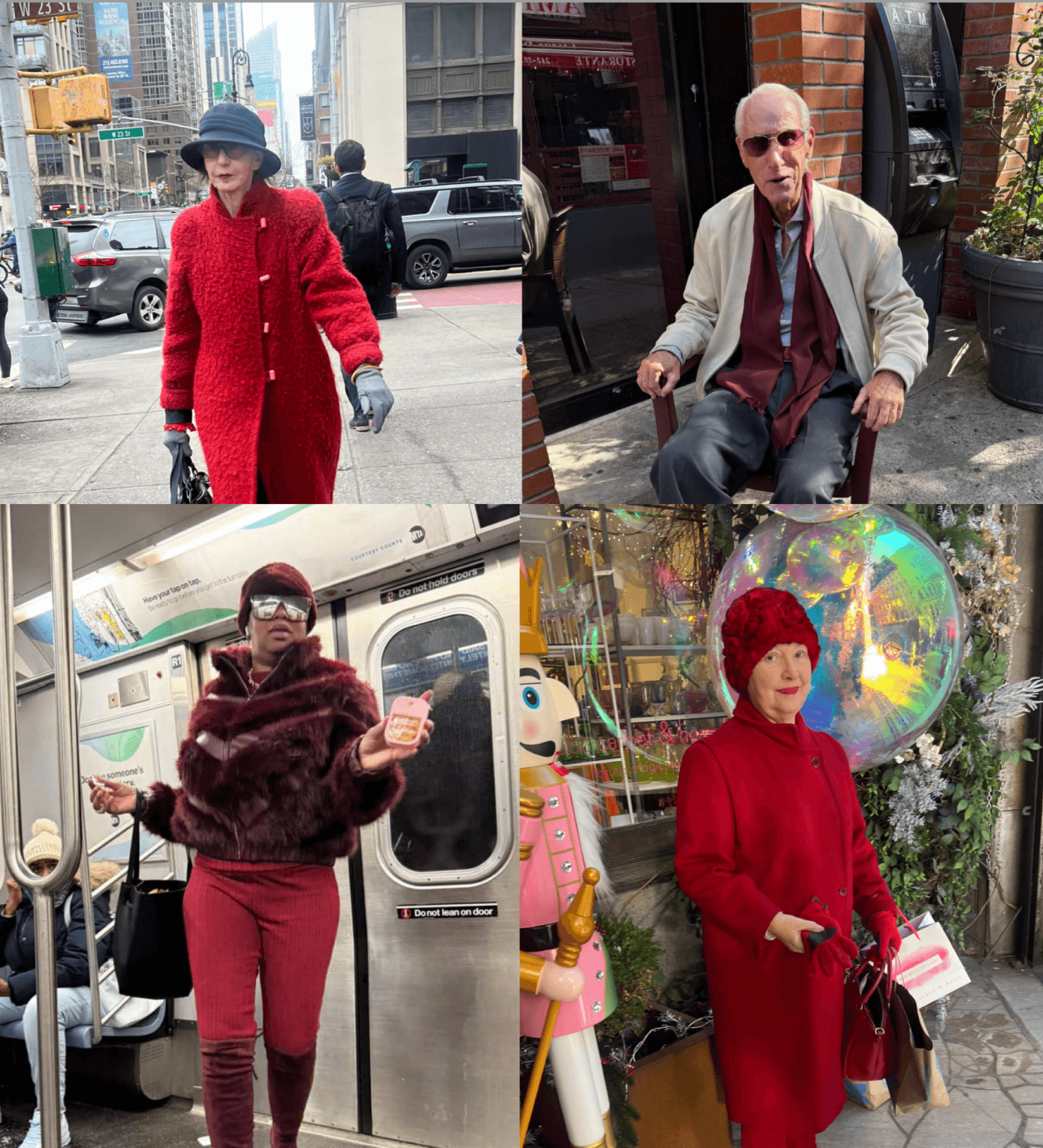
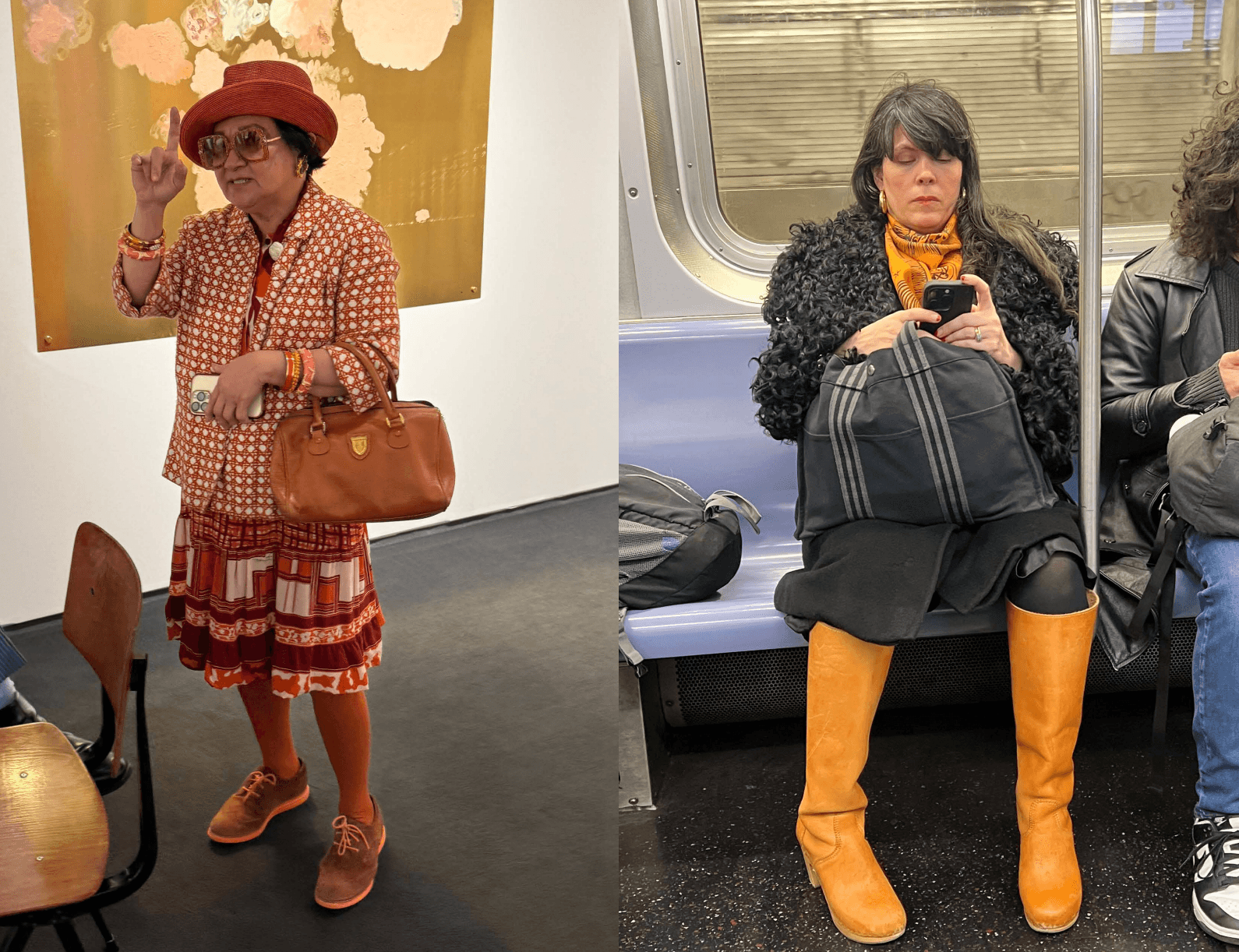
I wouldn’t say that Gourin is photographing “style” in the usual sense. Her subjects are often older, more idiosyncratic than the types favored in contemporary Street Style columns. The interest lies in how personal style hardens over time into something closer to character: a visible record of how someone has learned to occupy the city. Brewer’s sequencing gives the book its engaging structure: the photographs move through color, so that strangers begin to echo one another across the page. Red gives way to pink, then beige, blue, black, animal print.
Bill Cunningham once called fashion “the armour to survive the reality of everyday life.” Concrete Catwalk takes that seriously without becoming solemn. The result is a book about clothing as instinct, defense, flirtation, joke, and autobiography — and about the urban landscape as one of the last places where getting dressed can still feel like a public act.
Amanda Chemeche: When did you start taking these photos, and when did you realize, wait, this isn’t just my camera roll — this is a book?
Tessa Gourin: I have an ongoing joke with my friends that I want my final form to be a cool old lady in the East Village with purple hair. I observed so many of them during the many years I lived there and was really drawn to the way they dressed. I started taking photos of them and naturally, it evolved to social media. Only in the past few months did I realize it was cohesive enough to be more than just an Instagram highlight.
AC: Mike, when did you and Tessa decide to collaborate on this? Did you know each other prior? And what was the collab process like?
Mike Brewer: Tessa and I first met through my lovely girlfriend Sasha. I had done a book with our friend Marika Thunder who is really tight with Tessa. She then showed me some of the photos she has been collecting over the years around her neighborhood of these swaggy pedestrians! I loved it and insisted we make a book.
The process was awesome! She sent me the archive of her photos and we conducted all of our meet ups virtually using google teams. We picked our favorites and began doing the layout in indesign. She was settling into LA so I made sure to come correct with a Hollywood background on every call.
AC: The title Concrete Catwalk is funny, but it’s also kind of dead-on. The book doesn’t just read as stylish people on the street; it starts to feel like a full fashion show, with color stories, recurring characters, and people entering the frame like they’re walking a runway they may or may not know they’re on. When did New York start looking like that to you?
TG: I’m drawn to a very specific style and when I would see it, it began to feel like a game to successfully capture it on camera. Most of the people look like they’re in movement because they are, which, to me, is what makes New York, New York! I snapped many of them on the way to therapy or running errands. People in New York are in constant movement all the time. The character who recurs the most is an incredibly stylish woman named Alice. She plays the harp outside of the bodega in the East Village wearing a head-to-toe crushed velvet ensemble, come on! That’s the flavor of New York I appreciate.
AC: I want to follow up with the incredible color story. The book moves through color like a playlist: red, pink, beige, blue, black, animal print, neutrals. Was this structure something you discovered while editing, or were you already shooting with that kind of sequence in mind?
TG: I appreciate a monochromatic outfit or patterns that clash in an intentional way. It being a cohesive color story was totally unconscious. Mike did that with his brilliant editing.
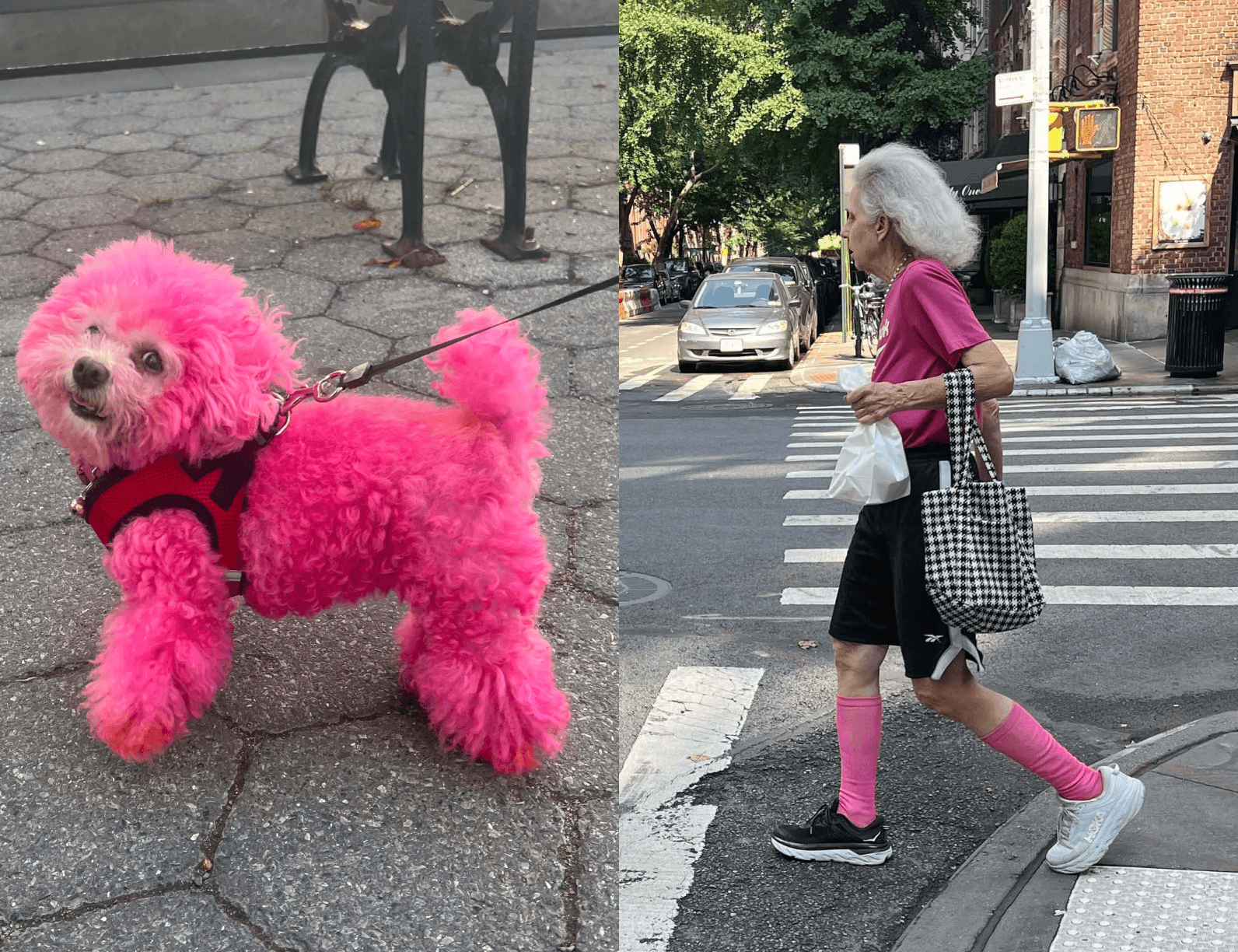
MB: Ayeee! I’m glad you noticed the gradual color shifts of this book! I tried hard to match people based on their outfit and vibe and we paid close attention to the order. My favorite section is the pink one (shoutout the small pink poodle, she's my favorite).
AC: What’s your own style like? What are you personally drawn to — color, silhouette, chaos, elegance, ugly-pretty things, people who look like they’ve committed to a bit for thirty years — and how did that shape who made it into the book?
TG: My personal style has always been evolving. I think changing it up based on what you like is what separates true style from trend following. My accidental uniform became a black ankle length skirt, tights, Guidi boots and a chunky black turtleneck sweater for years. I committed so heavily to it that eventually, I grew tired of it.
Nowadays it’s very low-rise jeans, t-shirt, leather jacket, and these matrix-eque sunglasses that I copied from a guy I dated. I’m always switching it up. I love a backless dress, a halter top. The people who I photograph remind me of the way I dressed as a little girl: playful and loud.
AC: The title Concrete Catwalk makes the city sound glamorous, but a lot of the images also suggest survival — people using clothes to project confidence, fantasy, humor, individuality, even protection. Do you think New Yorkers perform themselves differently in public than people elsewhere?
TG: Yeah, I mean, unless you’re super wealthy, New York isn’t that glamorous. Even then, you aren’t immune to a cockroach crawling on the ceiling of an apartment you pay 10K a month for. New Yorkers undeniably present themselves differently than anywhere else. It’s not just what they wear, it’s the way in which they wear it. Whether it’s a certain swagger, playing coy, saying fuck you, portraying a fantasy, etc. It’s all about self-expression.
AC: One thing that really stayed with me is how many older people appear throughout the book. And not passively — they’re stylish, theatrical, funny, elegant, strange. The book feels very invested in people who continue publicly inventing themselves over time. Did that emerge consciously for you?
TG: Yes, that is 100% conscious. I now feel like a magnet for kooky, well-dressed older people. They make up the entire book apart from my best friend, Lucy, who is the only person in it under 50. Her style is the epitome of an eccentric older lady in the way that there’s a sense of self-assuredness to it. It’s not this thought out, try hard way of dressing. It’s an Issey Miyake dress with shoes from the dollar store, and some beat up preppy bag that was distressed by her bulldog. To me, that’s style.
AC: The final line of the book credits Canned Planet 2026, so the project already has this handmade, zine-object energy rather than a polished gallery-book feel. Did you want it to feel intimate, almost like something passed between friends?
TG: I approached Mike with the idea because after seeing the books he made, I thought he would be the perfect person to work with. I really liked the style of them. He superseded my expectations, and we bonded while making it. It’s pretty crazy how effortless he made it seem.
AC: And Mike, let’s talk about this publication. Canned Planet feels so beautifully idiosyncratic to New York. You seem to make books out of scenes, obsessions, friendships, trees that eat things and visual habits before they become overly commercialized. How did you start this pub?
MB: I have been making books for about 5 years now. I broke my ankle at the start of the pandemic and wanted to do something productive while I was immobile. I started learning the Adobe programs by way of YouTube. I have so many creative ideas, and I wanted more people to see thier stuff and bring it together into something phyical. Each zine or book I release typically has a release party. It is so amazing to see so many worlds collide to celebrate the artists work and the books I make. I am so grateful for all the people that show up and support!
AC: Tessa, do you think you’ll photograph LA the same way, or is this way of looking at something that only came from being born and raised in New York?
TG: I’ve tried and so far, I’ve taken 3 photos of outfits that piqued my interest over the course of 3 months. It’s different. I grew up going there, but my soul is New York through and through. I’m a fourth generation New Yorker! My friend Zoe Dubno describes being from New York as a mental illness in her novel and I think that’s so well put. I feel really solid about my decision to leave, even if just for a bit.
AC: The poem at the end kind of cracks the book open. Up until then, we’re moving through all this color, humor, and street-level spectacle — and then suddenly we’re inside your head, with leaving, self-questioning, and moving towards something new, albeit less known that the place you grew up in. Why end there?
TG: At first, I kind of froze over what to write at the end, and then I remembered this poem I wrote on my notes app. I’ve been working on a deeply personal project for the past year, so being here began to feel suffocating- It felt right to flee the scene. Part of me felt like I was running away from something, and at first, I deemed that as “wrong”, but now, I don’t really give a fuck. If you’re a New Yorker, you can never really leave.