KatzPascale Lets the Room Cry
The New York duo make ambient, spell-like music for grief, catharsis, and whatever people need to feel.
By Sarah Fradkin
Photos by Zoe De Blasis
Published
This interview appears in our Out of Body issue, on stands now. Order your copy here or visit our Instagram for the latest updates in stockists.
At KatzPascale shows, something tends to happen to the room. People sit down. People cry. A father in Leeds, whose family said he had not cried since his wedding 25 years earlier, finds himself sobbing after a set by two New York musicians making something between ambient music, chamber composition, improvisation, and spellwork.
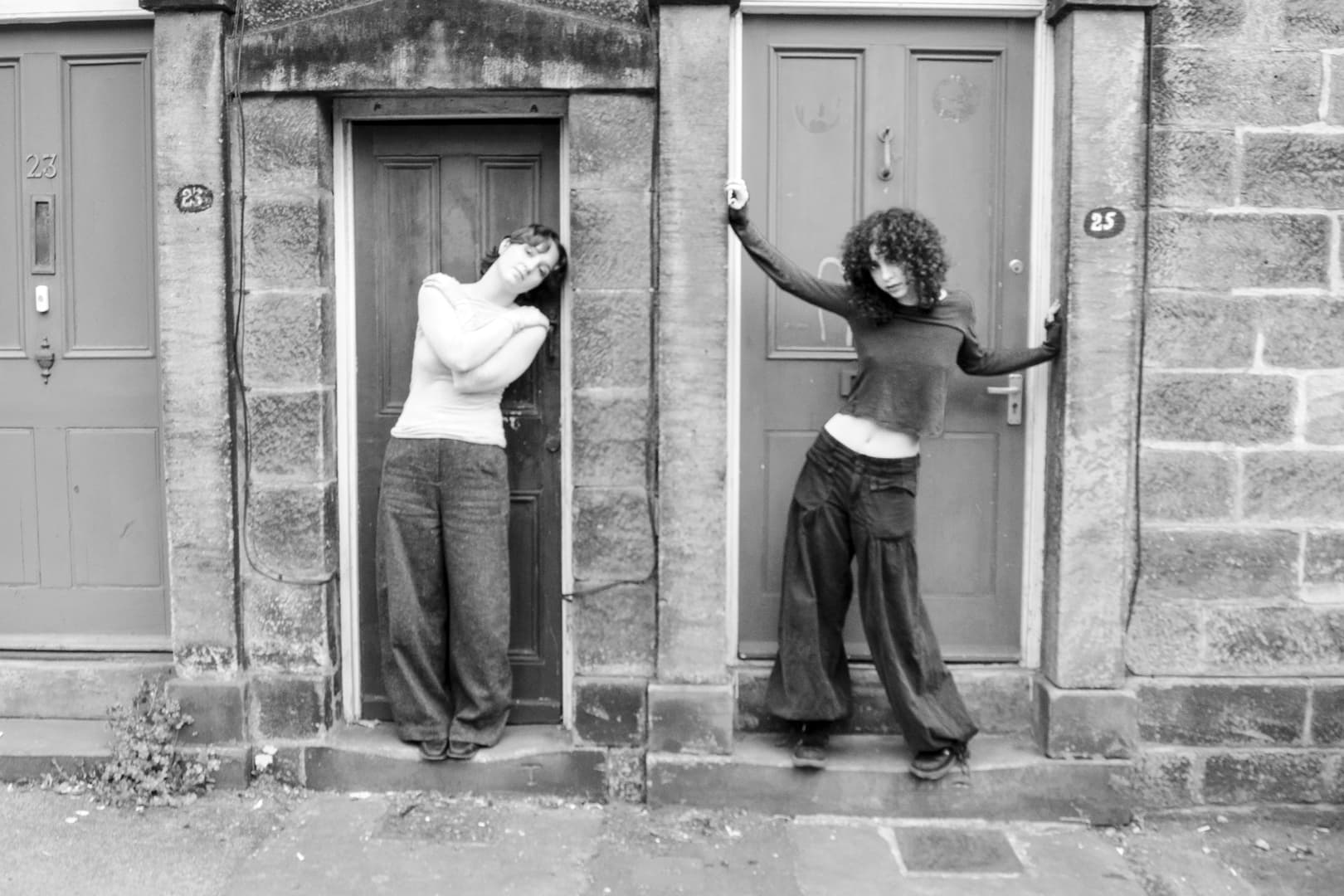
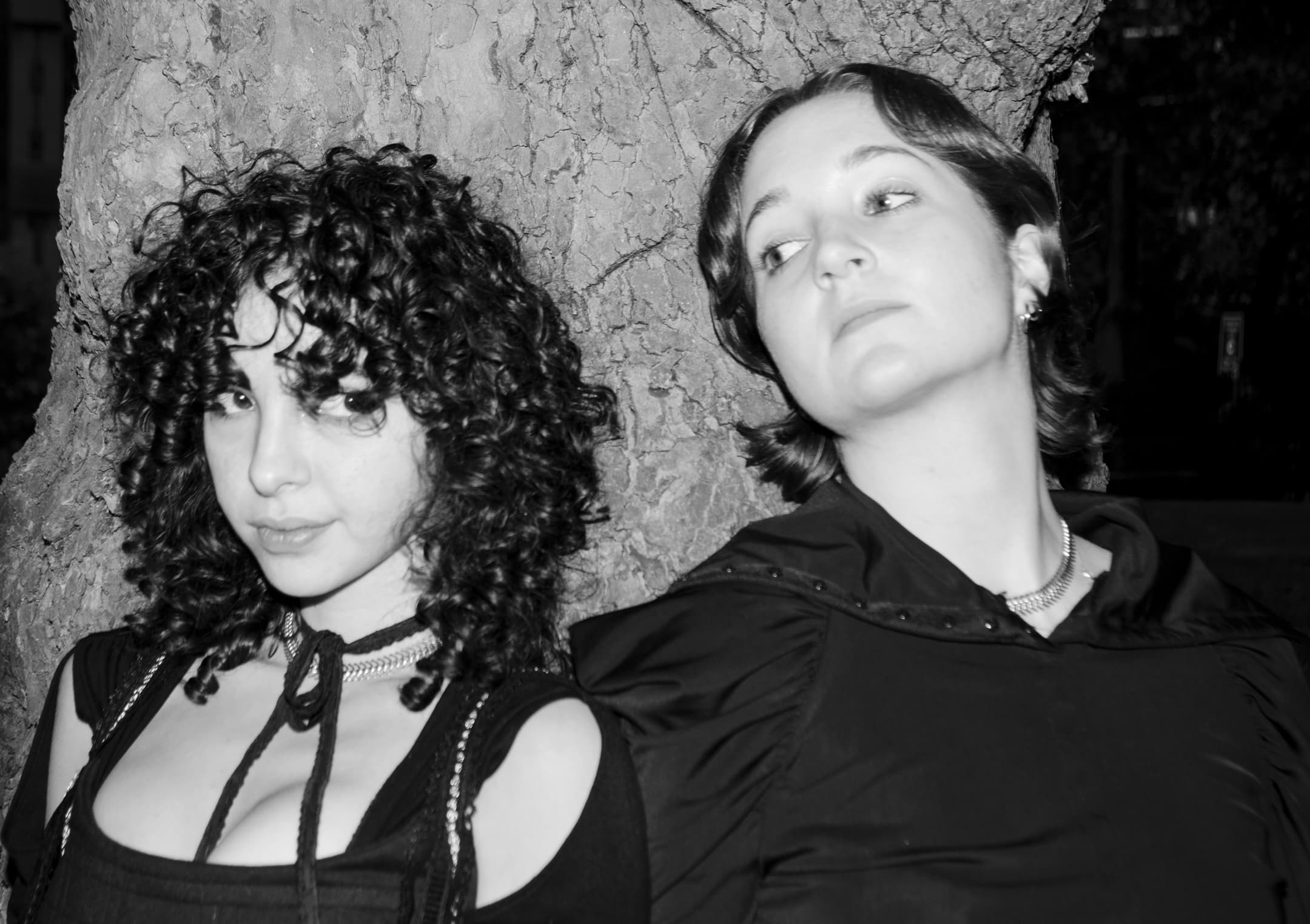
The experimental duo of Sammi Katzman and Jenna Pascale began almost by accident, somewhere outside the machinery of the indie-rock world they had both been orbiting for years. Their music does not announce exactly what it is or what it wants from you. Instead, it opens a space: cello drones, saxophone, silence, melody, texture, and the strange permission to feel whatever you arrived carrying.
Ahead of their debut EP, Elegy, Katzman and Pascale spoke with Sarah Fradkin about music as meditation, the strange intimacy of grief, writing “Mother” by accident, and why their dream bill runs from Philip Glass to Lil Yachty.
Sarah Fradkin: You just got back from tour today. How was it?
Jenna Pascale: It was amazing. It couldn’t have gone better.
Sammi Katzman: Yeah, it was so good. So awesome.
What was the best part? What are you bringing back?
JP: The London show, probably. And then The Great Escape went really well. We had a lot of meetings with different labels, everyone’s really excited, and it feels like things are moving in the right direction.
SK: It’s definitely really fun to bring our music to a different continent.
What’s your origin story? How did KatzPascale come to be?
JP: KatzPascale was born from me and Sammi. We’ve been friends for like five or six years, and we were both playing in different indie rock bands around New York as hired guns, doing stuff for other people. I started a solo project, and then we got together to do a show. But I didn’t want to play any of my own music, so I was like, “Sammi, do you want to just get together and do a show together?”
We rehearsed one time before. We had these little motif ideas that we improvised around. The show was in this basement in Soho, in this really weird building, a social club called CX. It was such a surreal experience, because there were all these people there, and as we were playing, everyone sat down on the floor. After the show, people were coming up to us like, holy shit, I’ve never experienced anything like that. So we were like, we kind of have something here.
It was a pretty crazy moment too. The subwoofer somehow caught on fire during soundcheck. And then we just kept playing shows together. As we kept playing, the project developed into this different thing where we were writing and making actual song structures, and the ball just kept moving.
We did a residency in Soho where we kind of looked at it as paid practice. We would go every week, sometimes twice a week, and play. It was open to the public and free, so that’s how we started to build an audience in New York. At the same time, we were recording everything when we rehearsed, just on iPhone, the shows and the rehearsals, and posting tiny clips on TikTok of the raw shit. Then that started to pick up momentum, and things just snowballed from there.
SK: I don’t remember the exact first time we met, but like Jenna said, we were friends for a while, and we always would say, “Oh, let’s play together. Let’s jam sometime.” I meant it genuinely, but we didn’t actually do it. Then we actually did do it, and we were like, woah, we should have done this way earlier.
JP: I think it was perfect timing, because both of us were at the point where we were like, “Fuck this indie rock shit.”
Since this is for our Out of Body issue, I have some spiritual questions. Have you guys ever had an out-of-body experience?
JP: I feel like every time we play.
SK: When we saw Colin Stetson at Green-Wood Cemetery, that was out of body. That was before the band started, probably like two years ago. I don’t know if you’ve ever been to Green-Wood Cemetery, but they throw concerts there, and we went with some of the indie rock people, which is ironic. Colin Stetson is a saxophonist, and he mics his body to give a percussive element to the music. It’s not just the saxophone, it’s also his voice. He did the Hereditary soundtrack.
JP: It was just him on stage with these massive speakers, so subby, and we were standing in front of them like, holy fuck, what is this?
SK: It’s a very unique feeling that I hadn’t felt from live music in a while. I feel like that’s only been replicated when we play.
JP: I also think it was when we accidentally wrote “Mother.” It was at one of these Soho shows I mentioned earlier, where we were just messing around in front of an audience on our instruments. We locked in over this drone that I looped on the cello, and we played the melody that’s in “Mother.” I was actually crying as it was coming out of me, and you were crying too. We had never played it before. We just locked in, in a moment, and made this melody, and it actually made me cry.
SK: And at that show, there were so many technical difficulties. Everything was not working, but we still randomly wrote that. It was so awesome.
JP: We took that melody and turned it into “Mother” way later.
“Mother” also makes me cry, in a really good way. Like tears of joy, catharsis.
SK: Hell yeah, that’s good to hear. Sometimes I was worried, like, will people leave our shows feeling really sad all the time? Someone in Leeds before the show talked to us and was like, “I’m scared. I don’t want to get really depressed after your show.”
I think it’s a great melancholy feeling. It’s like a life feeling. Have you guys ever dabbled in meditation or mysticism or spirituality?
JP: I’ve gone through phases of getting into meditation. I’m trying to get back into it now, especially now that we’re touring, because it’s pretty hard on the body and the mind and your serotonin. You run out of dopamine. I was just talking to my therapist today, and she was like, “You should start meditating again.”
SK: For sure. I need to tap back into that too. I did during the pandemic a bit, when it was a great opportunity to, but it’s been a while. We should, especially on tour or in between tours.
JP: Every time we perform, it’s meditation, because we kind of leave our bodies a bit.
Is there a place around the world or near home that makes you feel sacred? Somewhere that brings you inspiration?
JP: My room at like 2 AM is when I get most of my inspiration, journaling.
SK: Honestly, anywhere that is completely, jarringly different. Like Tokyo. No specific place, but I feel like I’m most inspired not being in routine.
JP: That’s so funny. I’m the opposite. The more routine I have, the more I can get somewhere. Especially if I’m writing songs with lyrics, I need to have a couple days of the same routine before I get something. I have to get into the mindset of journaling, writing notes down for a couple days, because if I don’t get into that, I’ll just not do it for long periods of time.
SK: That makes sense. I don’t know if mine constitutes sacred, but I don’t like familiarity when it comes to creativity, I guess.
Does making music bring you closer to your higher selves? And what have you found out about yourselves in writing these songs for the upcoming EP?
JP: 100%. Another realization I had in the past month was that the only thing that takes me out of anxiety or overthinking is music. That’s the only surefire way to reset my brain.
SK: Totally. It is the ultimate form of happiness too. Playing or making something is number one of all time, I think.
JP: Definitely. Part of it is that I feel like I’m doing something, like I’m being productive, which is a good feeling. But it’s also something else.
SK: There’s a lot in it. The ability to have it resonate with others positively is such a reward. Of course that’s a product of it, but creation is so fun.
The songs you’ve released so far, and this upcoming EP, sound like they’re dealing with grief or getting through some kind of traumatic moment.
JP: Something someone said recently after one of the shows was that because there’s no clear storyline in our lyrics, it gives people space to project their own shit onto the music. I think maybe that’s part of the reason why it’s helpful for people when they’re going through something. What we want people to take away from the EP is that they can go in with their shit and be able to project their own things all over it, and hopefully come out the other side feeling lighter. Here’s the soundtrack. Go through the shit. It’s less lonely that way, because we’re there with you.
SK: Yeah, I completely agree. The EP is like the show. We play all the songs at the show, and it’s not about us. When people are watching us or listening to this EP, it’s totally not about us. It’s about how you react to it and how it makes you feel.
JP: We had a girl bring her dad and her mom to the show in Leeds, and after, the mom came up to us and was like, “I haven’t seen him cry since our wedding.”
SK: Twenty-five years ago.
JP: Then he came over and started saying, “I don’t know what about it…” and then he started crying again.
SK: That was such an awesome moment. This curmudgeon dad who hasn’t cried in 25 years is sobbing in this random little city in the UK. That’s what we want, if that’s what feels right. We want to be a safe space to feel any emotions. What the music means to Jenna or me or you is going to be different than anyone else in the crowd, and I think that’s a good thing.
JP: It’s kind of more like the way visual art is. I feel like that’s more common with visual art, where you look at it and everyone’s got their own thing. Songs aren’t always like that. They’re more like, here’s how I feel, I’m in a breakup, you had a breakup, the song’s about a breakup. But our music is more like, it could be about anything.
It sounds biblical almost. Very transcendent, like angels are around you.
JP: So fire.
SK: The first thing you hear when you enter heaven.
Does anything make you feel like you’ve been given the answers to life’s questions?
JP: I would say no, but there are things that make it easier to not think about. I don’t think there is any answer, but there are things you can tell yourself to calm down about it. It’s all about just being fucking positive and not thinking too far ahead. But also, if you’re going to think far ahead, think about everything you want, and trust that you can have anything you want if you’re happy. That’s how I look at it. You can be happy if you decide to be happy, and that’s the only way to live life, I think.
SK: Everything is mindset. How you talk to yourself internally dictates your life, how you perceive the world, how you interact with others, how you feel. I’m constantly working on that. I’m not perfect at it, but it’s something I’ve really been trying to internalize lately.
It’s a practice.
SK: Probably takes 50 years to master.
JP: No, that’s the thing though. It doesn’t. It’s just you being like, okay, I’m going to do it today. Today’s the day. Then you decide, and it’s like, oh cool, I had a really good day. These things fluctuate.
SK: Yeah, that’s the thing, cutting the fluctuation.
JP: You can never get rid of it, but you just have to constantly—well, I don’t have the fucking answers.