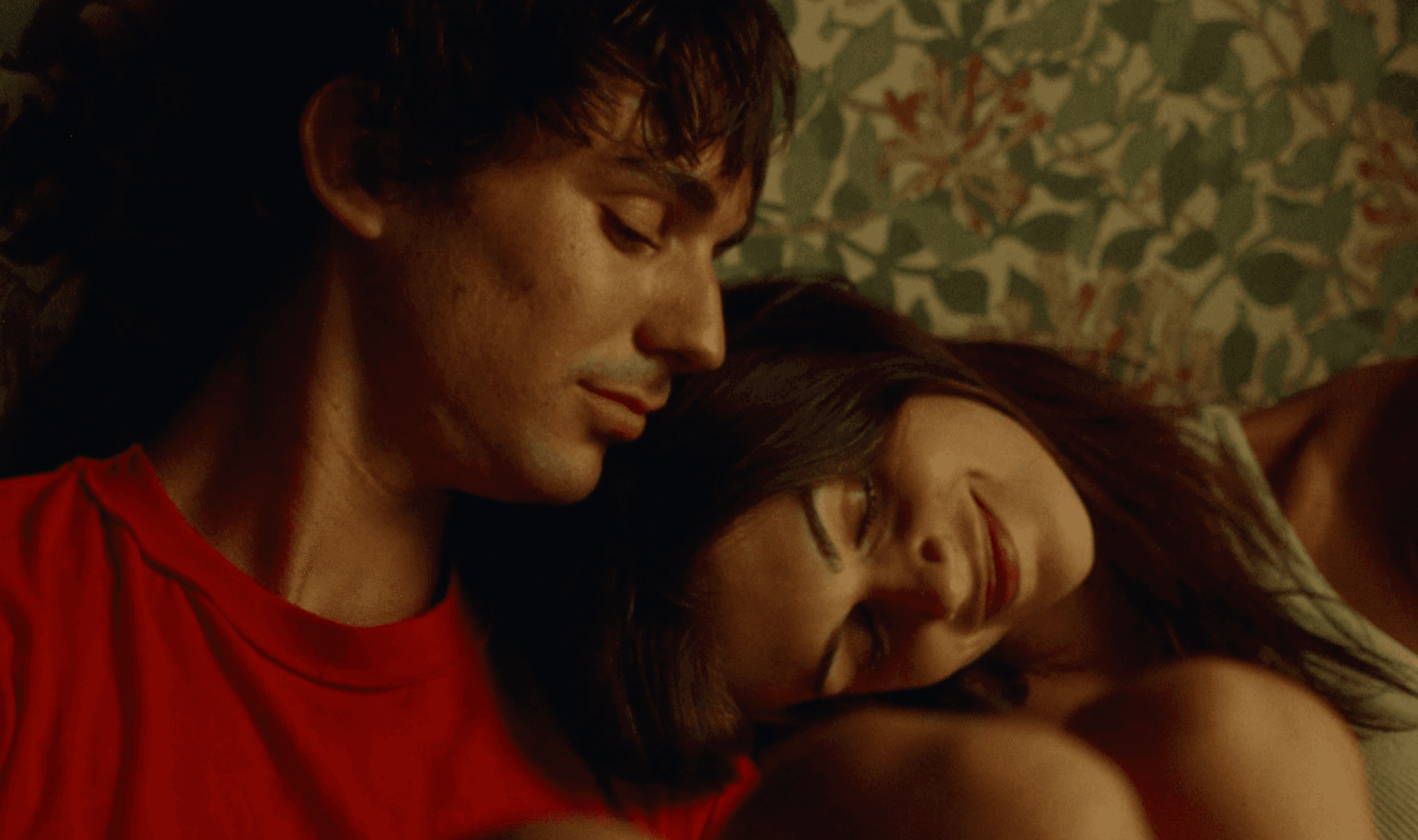
Following the success of JOB, Max Wolf Friedlich writes his latest work from the frontlines of the great culture wars.
By Ali Royals
Published
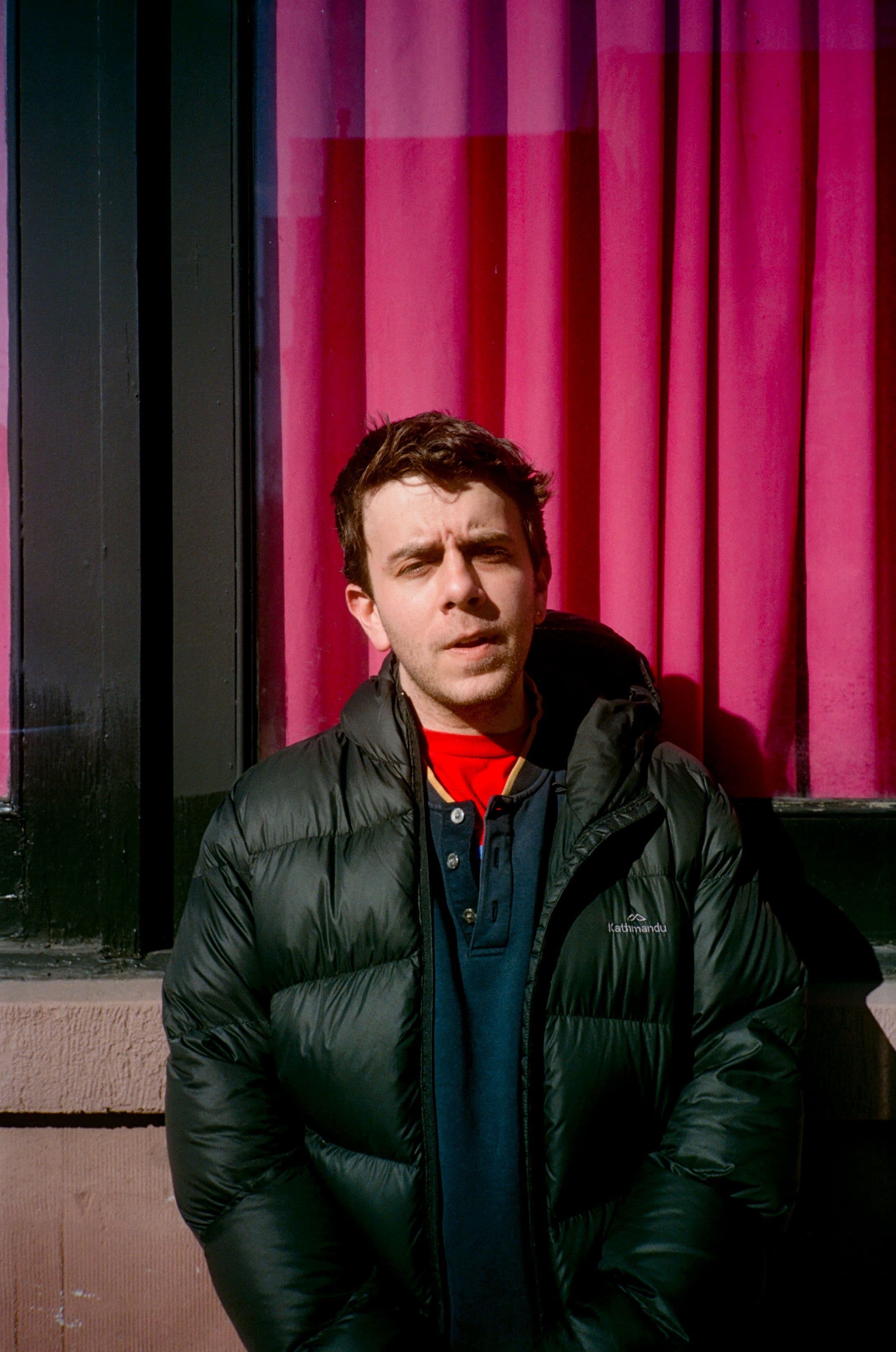
Max Wolf Friedlich is thinking about crossing the line. Or lines, rather. There are a few on his mind: those of shame and desire, tradition and progress, individualism and community. His new play, The Holes, is 120 minutes of Bubba Weiler, Tina Benko, Jack Mulhern, and Grantham Coleman crossing those lines with each other. “The whole play is kind of one big Cold War,” Max explains over iced tea at Abraco. “Shame and desire is an all-time classic. To what extent should we feel ashamed of what we want?”
The last time I talked to Max, he wanted three things: to get young people to see theater, to make theater-going more accessible, and to make the Internet dumb again. He’s succeeded in at least two of those goals. Max’s life has changed a lot since JOB’s debut, his psychological thriller one-act play exploring how the insidious depths of the Internet can seep into real life. He moved back to L.A, trading New York’s rats and pigeons for coyotes and raccoons. He adopted a slower, FOMO-less pace of life filled with writing in his garage and hanging out with friends at home. He no longer deals with the existential dread of what if nothing ever happens.
Whereas so many writers feel an insurmountable pressure of putting out their Second Thing, Max feels freed by the success of JOB. “I’d be in rehearsals feeling like this is all gonna fall apart. I had just come off working as a PA on a TV show. I was getting people lunch. There was nothing to lose,” he laughs, “until the buzz started to pick up. Then it felt like we had everything to lose.” With The Holes, things are different. “There’s been a floor-raising,” Max explains. JOB has recently opened in China, in New Zealand, in Brazil. “Someone in Auckland is stressing about how to light that play. I get DMs from students in Melbourne asking questions about the plot. If The Holes shits the bed…well, at least we had that.” He feels rather assured The Holes won’t have the same viral success as JOB—but talking to Max, one distinctly gets the feeling that The Holes, too, will be a smashing success.
It’s a script Max has been working on since he was a self-described chubby, insecure middle schooler. “My mom, being the angel that she is, got me into theater to help boost my confidence,” he says. He fell in love with it at The Wayfinder Experience—a Live Action Role Playing camp whose homepage urges you to “find the hero inside”—where he still works as a counselor each summer. Through the camp, he was cast as Rumpelstiltskin in a local production of Once Upon a Pandora’s Box, where he made $200 a week and realized he actually didn’t like being told what to do as an actor. So he turned to writing.
Much like Jesus himself, The Holes was also created in December—but of Max’s 8th grade year, not sometime between 4-6 BC. His (Max’s, not Jesus’s) middle school English teacher, Mr. Byrne, tasked the class with writing their own Christmas plays. Max was immediately called into Mr. Byrne's office. “The first thing he told me was that my play was amazing and I should become a writer,” Max says. “The next thing he told me was that he was going to have to call my parents because my play was ‘just a little worrisome.’” He laughs. “Like, an adult should be informed that this is how I was thinking about things.”
Max put the play away for many years. Then he fell in love, and not just with anyone. Hannah Getts is, among a lengthy list of impressive titles, Max’s longstanding creative collaborator, dramaturg, lead producer, co-writer, and girlfriend. An early version of The Holes was the first thing the pair worked on together in the summer of 2018. They’ve been working on it ever since, staging readings with star-studded casts: Neil Cunningham, AKA Miranda’s teenage son in the Sex and the City spinoff; Dominic Sessa pre-Anthony Bourdain, post-_The Holdovers; Nick Braun of Cousin Greg fame.
The depth of history the play carries has allowed The Holes team—Friedlich, Getts, director Michael Herlewitz, producers Adam Rodner and Russell Kahn—to fully craft the best version of it. “Michael is a big proponent of being like, ‘I read the draft from when you were 24, and I think we should lift these lines out of it.’” Hannah does something similar. “Our romantic and professional creative relationships are inextricable,” Max says. “Hannah sees me so clearly that she's able to really move the play around.”
JOB was a period piece. The Holes is a fairytale—or at least that’s what the promotional materials promise us. It’s not directly inspired by lived experience, but draws from themes of Friedlich’s childhood, subconscious or otherwise—concepts he’s particularly drawn to, lines he’s curious about crossing. “I’ve been thinking about issues of faith and belief,” Max says. He was raised as a secular Jewish New Yorker. “I was brought up sort of culturally atheist,” he explains, “which I wanted to examine.” He’s investigating not just how, but where he was raised, too. “People hear I grew up in Chelsea and think I grew up on The Highline. They react like I was raised in a Juul pod or something.”
“Chelsea is—as Sarah Schulman points out in the wonderful book, Gentrification of the Mind—by many metrics, like, the most gentrified neighborhood in the world.” Max’s parents moved there in the late 80s. “When it was The Bushwick of its day,” he jokes. The Holes is set in a bar in a town upstate actively undergoing the process of gentrification. “There's no greater engine for real estate development and gentrification than anti-racism,” says Max. He laughs, already thinking of how Twitter will take that out of context. “This is not to say we should be afraid of one another, or that we should be racist. But this progressive ideology of ‘we're all big, one big happy family and there's no difference between you and a black family that's lived in Bed-Stuy for 3 generations’ has sort of been perverted to support capitalist goals.” That assertion of sameness as a means of belonging is something Max feels drawn to negotiating with his characters.
“I’m not trying to put on my weird white boy New York blaccent and be like, I’m really from here. But I am from here,” he laughs, his fist closing to reveal his New York Knicks tattoo—NYK in spindly letters across his middle three knuckles. “A lot of the play grapples with the thought of: how do you claim the place that you're from while also acknowledging your role in making that place less special?”
We all play our own roles in The Great Wars of Our Time. Max considers the hardest one to fight in is Authenticity vs. Artifice. “How do you have an authentic experience in the time of Big Tech?” He asks. “Like, I love my amazing Indian food spot in the basement of a temple in Flushing, Queens, but I found out about it from Instagram. You know?” And it’s true. Big Tech has made authenticity scarce, almost unreal. “I wish that it was, you know, we’re putting this on in a loft on Avenue C, and it's 1985, and we're all going to be the greatest actors of our generation, but that’s not the world anymore. We’re using Eventbrite, and someone has to talk to me about digital strategy.”
Will we ever return to a time where we’re comfortable being unconsumable? It’s a question central to the Great War of Tradition vs. Progress—a tension that forces you to consider how to bring the best of the past into the future, without bringing all the bad too. “On one hand, things should be sacred,” Max explains. “But tradition can also represent transphobia, homophobia, racism, sexism. There's an element to progress of expanding our understanding of gender, of socioeconomics…” he trails off as the girls sipping iced lattes at the table next to us side-eye him hard. “They totally think I’m, like, listen, sweetheart, let me tell you about the war.” We laugh. Ahh, the great panopticon effect of being perceived, of authenticity vs. artifice in action.
Max Friedlich is thinking so deeply and singularly about the inner tensions yanking the wheel of culture back and forth across the highway of time. The Great War he’s most curious about is that of Shame vs. Desire. Among the list of questions he’s asking himself: Is there such a thing as positive shame? Is there shame that actually keeps the guardrails on? “There are so many questions I don’t know the answer to. Are there things we should be ashamed of? Should people be ashamed of their kinks, their fantasies? What if it’s a Nazi kink? To what extent do you have an obligation to question fantasy? Is monogamy gonna hang on?” He drops his head into his hands, his camo hat glaring the word MARRIAGE back at me in a neon slash of orange. “What a hedonistic, insane world it would be if you pursued everything that you desired.”
The Holes runs from September 8th through October 18th at The Wild Project. Get tickets here.