What’s Going on with San Francisco Fashion?
There is a sartorial mood brewing in the Bay Area. Here’s an anthropological assessment of fashion in the city of fog.
Published
“Dude, she’s just, like, a big AI person.”
I’m walking down San Francisco’s Market Street, the main road that diagonally halves the east side of the city. Often known as its thermometer, Market Street gauges ratios of tech workers to housing crisis victims, tourists to local small businesses, Waymos to cable cars. If the phrase uttered behind me in a rather fratty voice was any indication of how San Francisco is faring as of late, I’d say we’re somewhere between a much-needed, tech-induced economic surge and a creative crisis. I slow down to catch a glimpse of the speaker.
Black puffer. Khakis. Brown suede loafers. A Salesforce ID card clipped to his beltline. Checks out.
In 2011, GQ ranked San Francisco as the 20th worst dressed city in America, crediting Zuckerbergian types for saturating the city’s wardrobe with the practicality of black puffers, REI galore, an overuse of fleeces, and a general lack of color. For the city known as the epicenter of the Flower Power movement in the 1960s, one that still flaunts a pastel rainbow of Edwardian and Queen Anne facades, the nationwide consensus seems to be that San Franciscans have blended in with the fog engulfing them, succumbing to both its cloud-ridden climate and abundance of clothing-indifferent tech bros.
Prior to climbing what has felt like every hill in the city for this story, I probably would’ve agreed with GQ. Admittedly, my experience of San Francisco in the last eight years that I’ve lived here, on and off, has been quite limited. I went to a Catholic high school, where the dress code required students to wear a collared shirt and any color of jeans except blue. Adapting to this rigidity as well as the chronic cloud SF exists within resulted in hundreds of kids pulling up to school looking as though they had dressed themselves colorblind and anemic. On top of that, I live near the Presidio, the national park at the northernmost tip of the city, where the moment you traverse its boundaries, the wooded paths and uneven terrain precipitate what most Americans would call hiking. The trails transform into runways for the newest Lululemon colorways and Hoka drops.
But it’s precisely because of these dichotomies between the remnants of hippiedom and technology-infused fashion—or more generally, subculture and mainstream—that San Francisco does have a distinct style. There’s more to it than meets the eye. Or perhaps it’s what meets the eye that makes San Francisco style so different from that of any other city in the world.
I decided to consult an expert for further elucidation: Keone Nakakura, manager of the iconic Decades of Fashion vintage store on Haight Street. “San Francisco has a long history of being this boom-and-bust culture where the cities revolved around one certain market. You could count this back toward the Gold Rush and the influx of people coming in,” he says. We’re standing among ceiling-high shelves and racks of pieces that date back to the 1880s. “Once the gold stopped, people had to find something else, so fashion changed with that, too. That same exact pattern is happening with the most recent tech boom. The city is lending itself to AI, and so who knows where it will go. It affects the way people dress and the types of fashion we see in the city.”
SoMa (short for South of Market) and the Financial District are the main meccas for technology and AI bigwigs. Pedestrians are dwarfed by tall, blue, and glassy earthquake-proof towers that define San Francisco’s skyline, the tallest being the Salesforce building, fully completed in 2018. (And kind of looks like a giant corn-on-the-cob). Suddenly, at 5 pm, the area becomes a stampede of Tumi backpacks, puffer vests, white sneakers, and quarter-zip sweaters, as corporate tech workers rush out like a school of identical fish, racing to nearby bars or bus stops. Many beeline to Salesforce Park, a 5.4-acre outdoor space above the Salesforce Transit Center complete with a bar, park, garden, and an amphitheater. Hot on their tails, Marcus (my photographer) and I ascend the escalator with them.
I stop a few girls who say they work in sales at ... Salesforce. They’re bedecked in Brandy Melville, Aritzia, Skims, Anthropologie, Old Navy, and Costco. When I ask if San Francisco has a distinct sense of style, they respond that it’s “very laidback” and “more casual than anything.” “There’s a lot more outerwear because of the weather. There’s more hiking stuff, like North Face or Patagonia.”
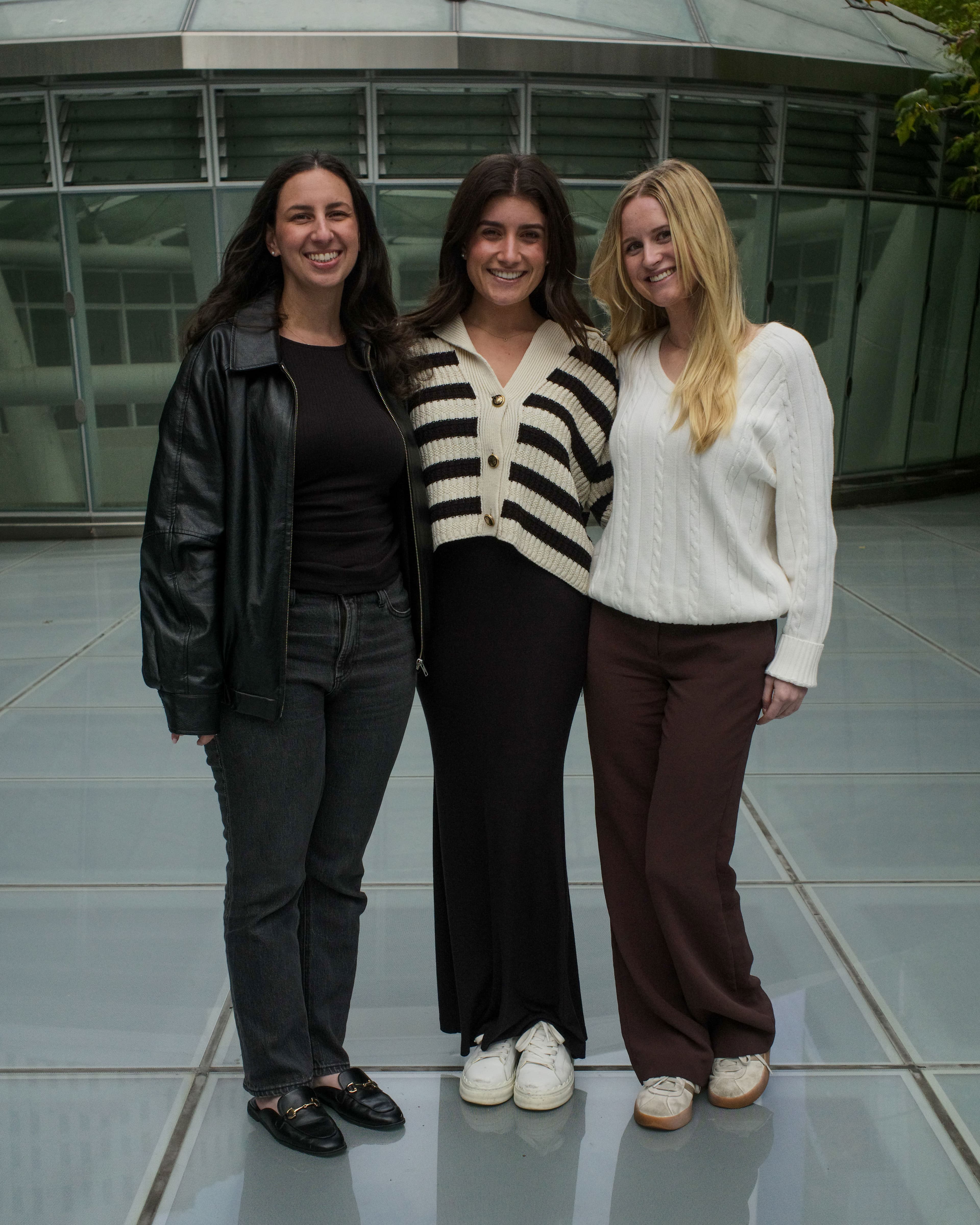
From left to right: Bree wears Costco pants, an Old Navy tank top, a black leather jacket, and Old Navy shoes; Miranda wears a Skims dress and an Anthropologie sweater; Melissa wears a Brandy Melville top, Aritzia pants, and Adidas shoes.
Back down in front of the Salesforce building, software engineers and new Bay Area residents Pierre and Mila agree to an even further extent. “Everyone’s dressed down,” says Mila. “You could look like shit, and then your clothes could also be, like, kind of shitty. And it’s fine.”
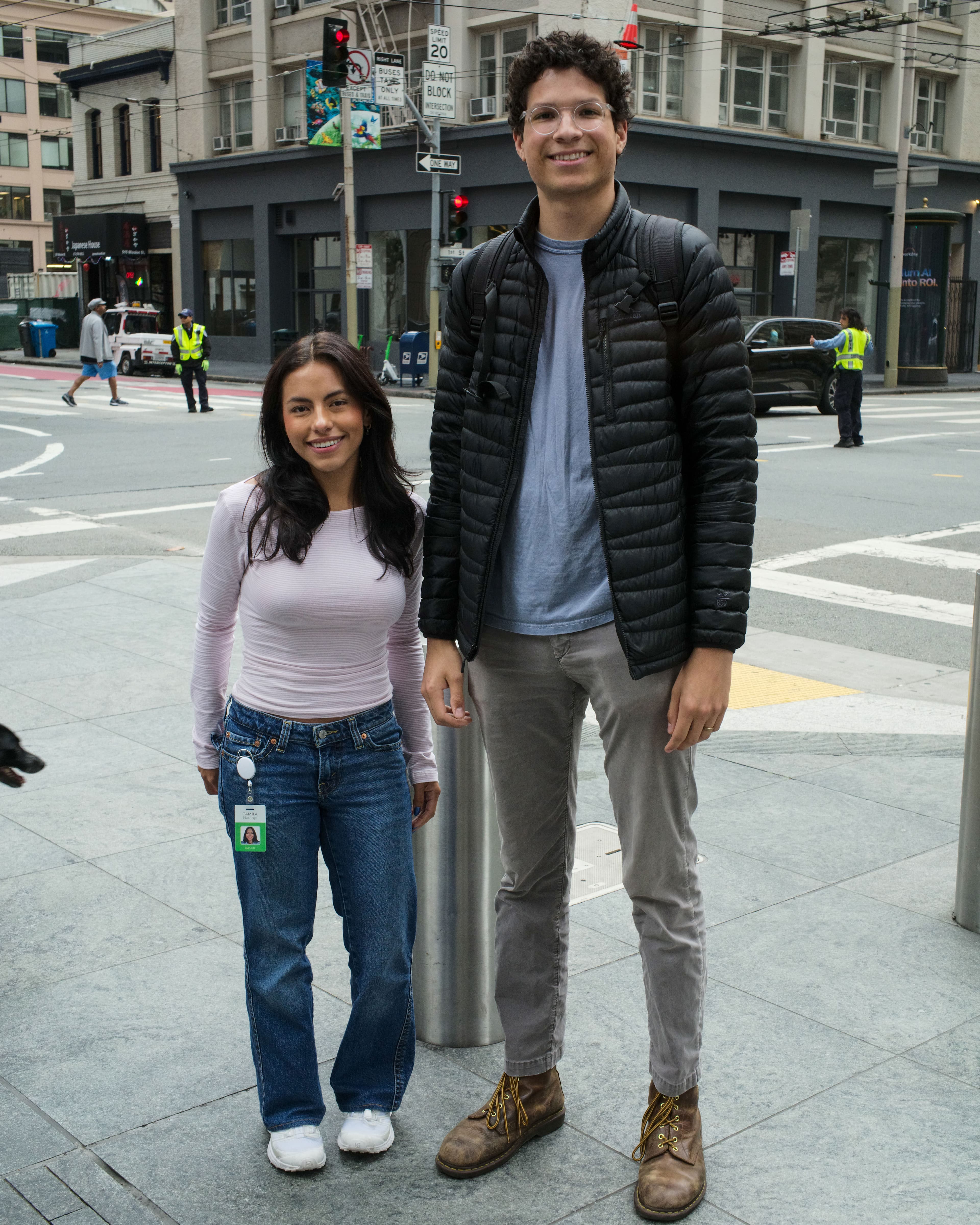
From left to right: Mila wears a long-sleeve shirt she got in Vietnam, a pair of blue jeans, and Solomons sneakers—a pants and shoes combination she says is “criminal” back in her hometown of Miami; Pierre wears a Carhartt shirt, a black puffer “bought specifically for SF,” American Eagle pants, and Dr. Martens boots.
It’s a different story on Haight Street, the heart of San Francisco’s hippie scene in the 1960s. The street still maintains its original countercultural, psychedelic flair, but now it’s directed at tourists from around the world. It’s relatively quiet on the late Wednesday afternoon I’m there, save for teenagers in baggy jeans and colorful torn-up tops, drinking out of brown paper bags; thrifters stalking up and down the street as if on a top-secret mission; and groups of older punk rocker types in studded leather, sitting in what looks like Kumbaya circles in the middle of the sidewalk. Incense wafts through the air while Tibetan music plays somewhere in the distance.
I stop a boy and a girl, fascinated by their outfits that look like something I would’ve seen three years ago when I regularly went out in Bushwick. Their names are Andrew and Jaden, and they have just moved to San Francisco for school. Jaden wears a top she saw influencer Hannah Kim wear, Miss Sixty shorts, and Isabel Marant wedge sneakers. Andrew wears pants from his own brand, Alias, a Reckless Scholars hoodie, and Meta Ray-Bans. He suggests I buy a pair so I can secretly look up people as I interview them on the street, which is, fittingly, the most Bay Area thing anyone’s said so far.
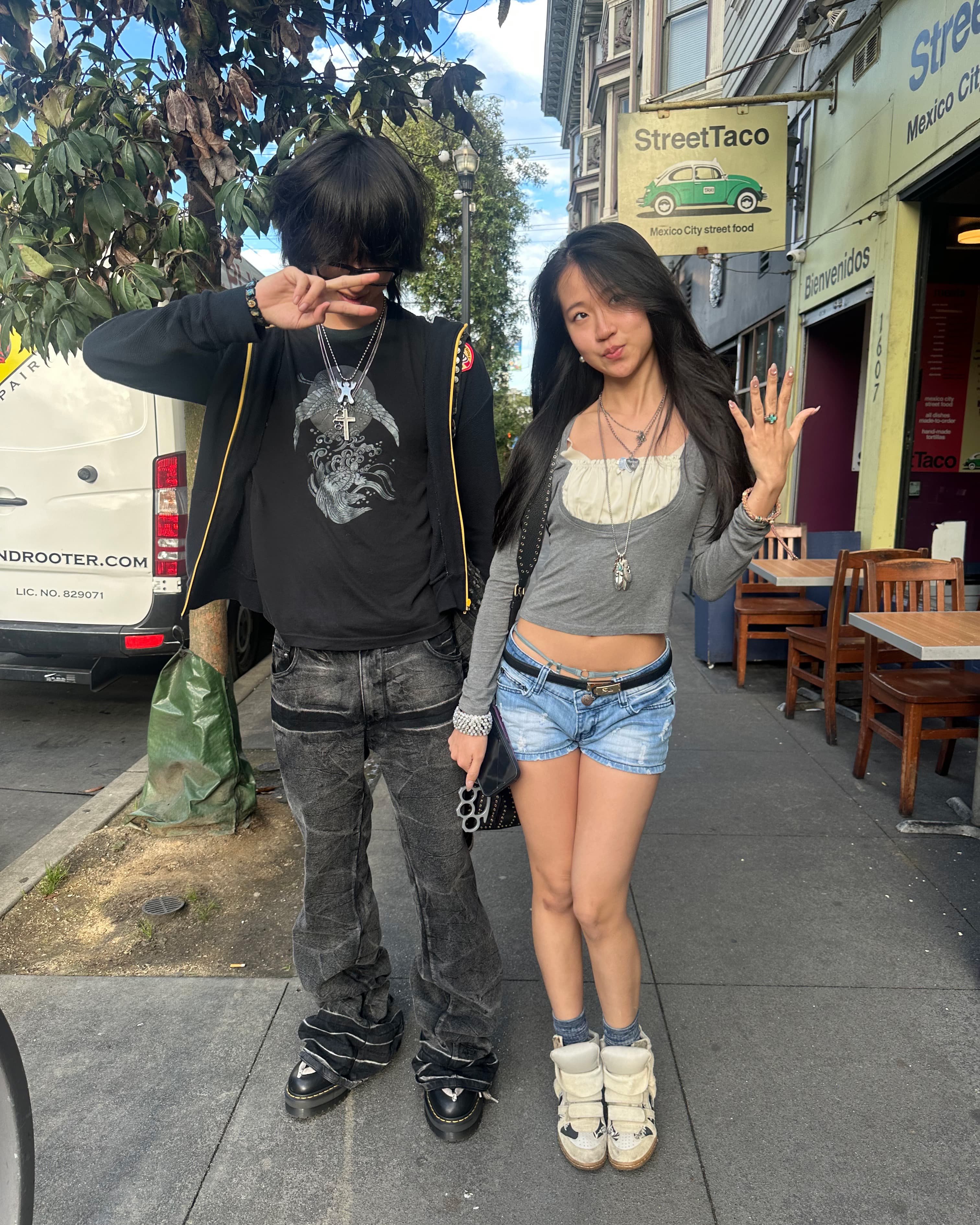
Over DM later, Jaden tells me San Franciscans don’t seem to have style, but appreciates the niche topics she overhears vintage store owners talk about.
I duck into Held Over, a Haight Street staple for vintage finds that supplied my late high school and early college wardrobe. A man with long hair and a T-shirt bearing a skull on a crucifix walks outside, waiting for his friend to finish shopping. Intrigued, I follow him out. “I’m wearing New Rock boots, Anchor Blue Beyond Baggy jeans, a Deicide death metal shirt, and Vitaly jewelry,” he tells me. He turns out to be from Portland, but made his way to San Francisco for The Prodigy’s concert at Warfield. He describes the crowd there as “very punk, goth, and streetwear” oriented. “San Francisco’s pretty counterculture,” he adds.
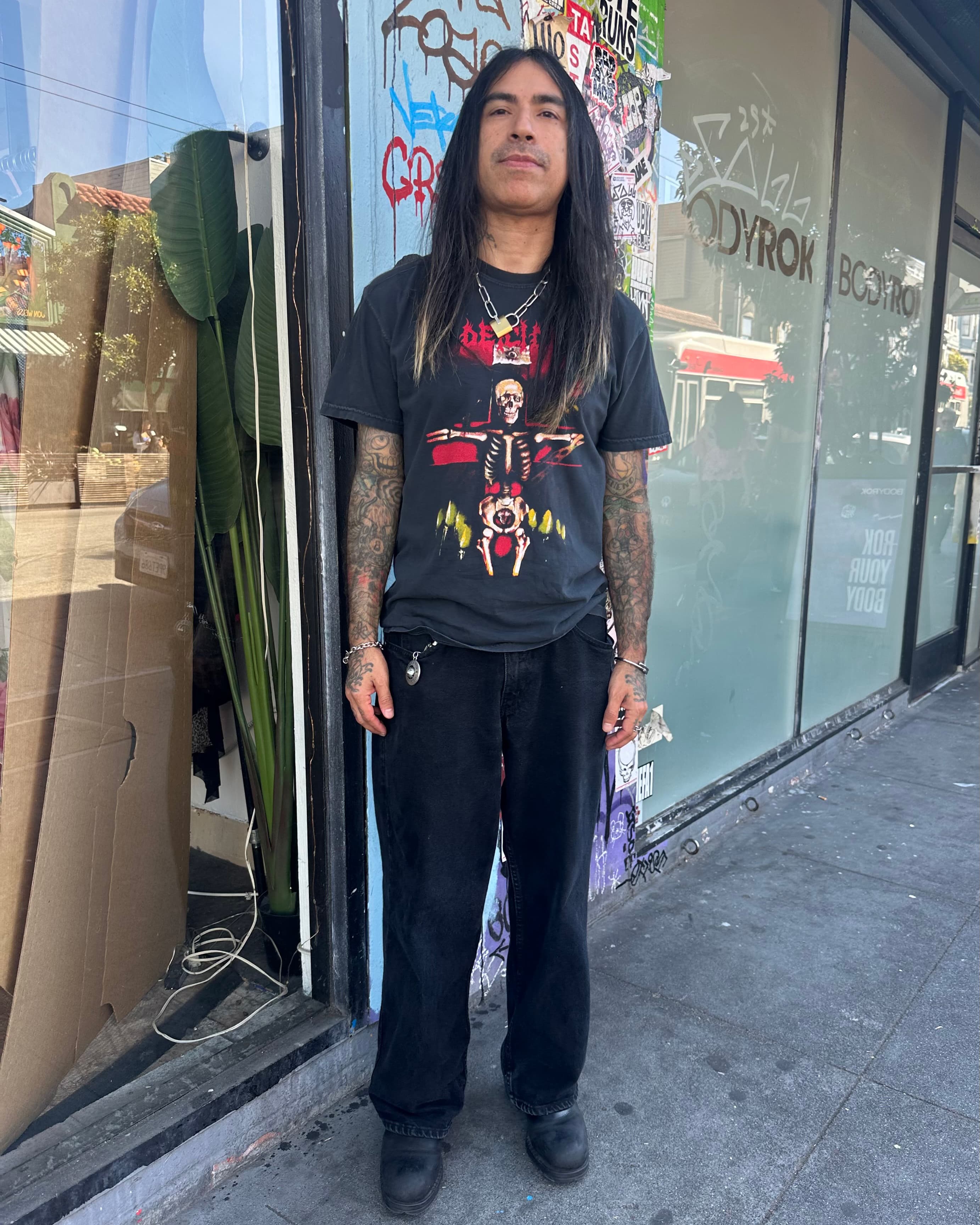
Angel Martinez says that San Francisco style seems to be “all over the place.”
San Francisco is entrenched in music history with genres ranging from jazz to rock and techno to dark wave. The Mission District breeds many of the city’s music-born subcultures, which, in turn, stoke the flames for more authentically San Franciscan styles. I had always categorized the Mission as solely the Latino neighborhood, where my dad would purchase ingredients to make mole at home or where I’d be scolded by abuelitas behind counters for speaking in broken Spanish (which did happen to me on the excursion I took for this article: my ancestors are rolling in their graves).
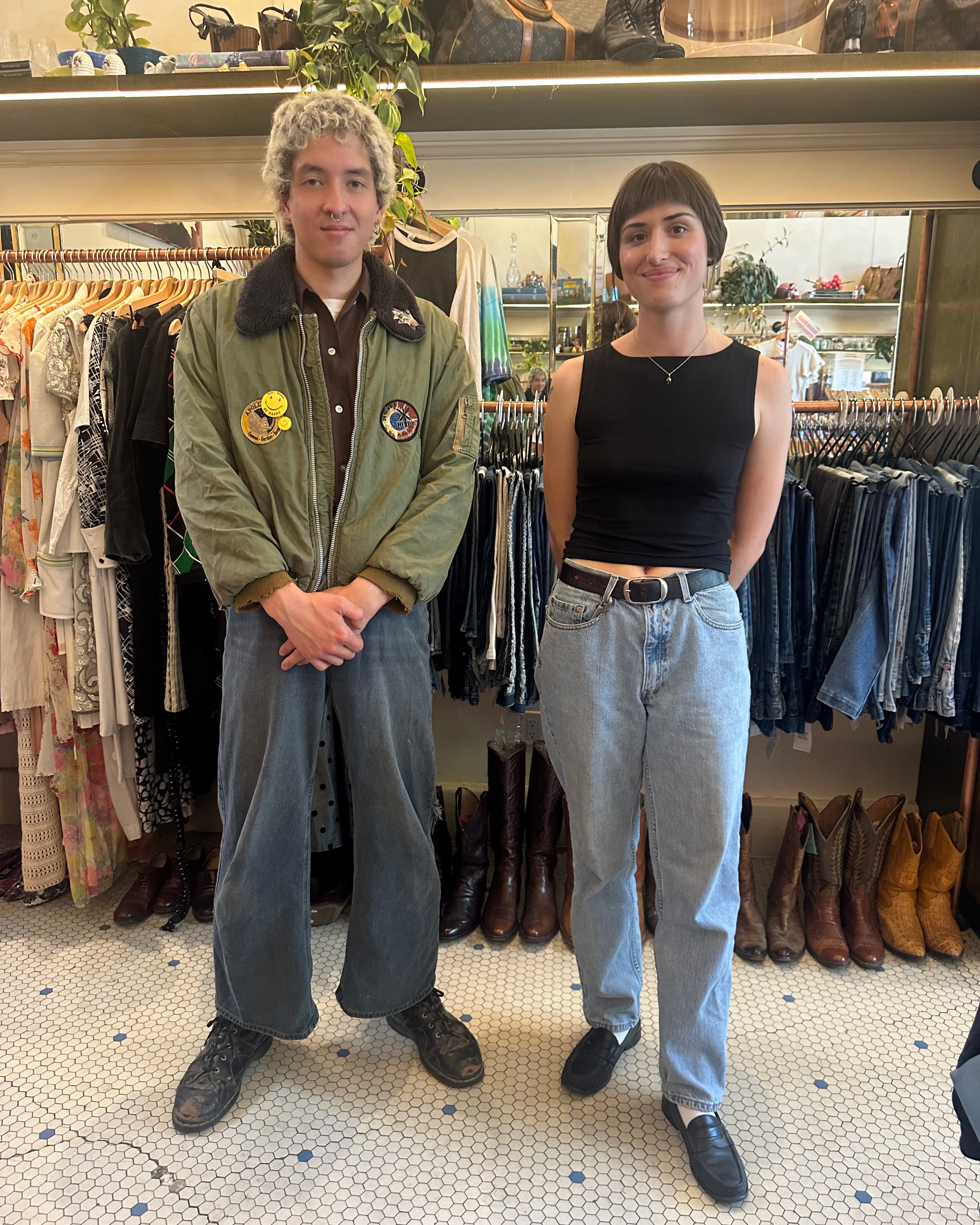
Valencia Street boasts a wide array of thrift and vintage stores, each catering to the youth subcultures that run amok in the area. Shaelyn and Tim, the manager and sales associate of Valencia Street Vintage, are firsthand witnesses to the Mission District’s underground style and music scenes. “There’s a heavy DIY scene when it comes to fashion,” says Shaelyn. “I do think also that Chicano Western and the Ben Davis style is super prominent here. You’ll see two dudes wearing [Ben Davis] hit it off and start talking about the quarter zip, the Gorilla cuts. It can get super niche and there’s a lot of self-expression.” Tim adds: “It’s a pretty even mix of Chicano Western workwear, ranchero-wear, classic zoot suit, low-rider wear, and sportswear.”
The two are staunchly against the notion that San Francisco has no style. “I think we get told that a lot,” says Shaelyn. “I think it’s because you can’t pinpoint it. If you see someone, you can tell most of the time where someone resides. Someone from the Marina is going to dress a lot differently from someone in the Sunset.”
“It depends on the subcultures you’re in,” says Tim. “People go to LA to make it. People come to San Francisco to make.”
From left to right: Tim wears a 1970s bowling shirt, a 1960s NASA jacket, Target pants, and Dr. Martens Church boots; Shaelyn wears a thrifted top, Levi’s 550 Jeans, a belt from Slash Denim in Berkeley, and Cole Haan shoes from Suede on Haight Street.
So while there doesn’t seem to be a singular San Francisco look, there certainly is a style ideology among everyone living here: You can wear whatever the hell you want, so long as it’s sincere. I left, enlightened. For years, coming back home was something I’d dread. My New York wardrobe and mentality just don’t fit this vibe, I’d think. I’ve moved on. I thought San Francisco wasn’t willing to embrace me. It turns out I wasn’t willing to embrace San Francisco.
And embrace it I have—I guess I’m a testament to the city’s cocktail of styles right now. I hiked to Baker Beach where I’m sitting in the sand, writing under a gloomy sky. I could’ve worn my typical mini skirt, boots and vintage top combo; but I’d be cold and uncomfortable if it wasn’t for my North Face fleece and Lululemon leggings.