Charlie Rinehart-Jones on Writing a Play After Work
Starting without permission. Stealing from real conversations. Here’s how debut playwright and director Charlie Rinehart-Jones made LIFESTYLES.
By Ali Royals
Photos by Geve Penn
Published
Approximately 2,775 miles from New York, there’s a town in Alaska where nearly everyone lives inside a single building. In LIFESTYLES, a new play by Charlie Rinehart-Jones, that uncanny, compressed world becomes the backdrop for something more familiar: the shifting, sometimes fragile dynamics of late-twenties friendship. Four friends spend a weekend in Whittier (Alaska, not California) and find their relationships quietly coming undone by proximity, both physical and emotional, bringing everything to the surface.
Pulling from real conversations and cultural noise, Rinehart-Jones draws on overheard lines, things picked up online, and the way people talk when they’re trying—and failing—to be understood. It’s sharp and specific, and at times disarming in its honesty, letting grief, desire, and absurdity sit side by side.
In true Byline fashion, LIFESTYLES is a debut play written late at night alongside a full-time job. So we had to ask Rinehart-Jones: “How did you do it?”
LIFESTYLES is on view through March 21. Tickets are available here.
How did you decide you wanted to write a play?
I spent a lot of my young adult years partying and making nothing at all. I showed up at other people’s things and watched in admiration as other people shared their work. I adopted an attitude that I couldn’t do anything myself. Then I started to have the smallest little germ of an idea and just decided to go for it. The play started to flow really naturally, so I kept that ball rolling.
Why is this the story you wanted to tell?
It’s really hard to be alive right now. I wanted to make something that was aspirational and also true. My goal, more than any other, was to see the way my friends and I communicate reflected on stage, but not to be played entirely as a joke. We have to go through grief, regret, and heartbreak in the same world as AI, Mr.Beast, and Feeld. So why are we pretending that we don’t in our art? I think because it’s easier to place the veneer on and say: I reject all that—and we can reject all that, but only to a certain extent. I hope this piece includes that idea without seeming too judgmental.
How did you do this with a full-time job?
I have a very demanding job. It took everything I had to manage both, and things fell through the cracks to make this happen. That being said, I struggle when I have too much time on my hands. This was so worthwhile to me that it was okay to sacrifice every free second I had to work on it. I mostly wrote late at night starting after 10:30 PM. We began most rehearsals at 8 PM, with the actors showing up before me and warming up.
From putting pen to paper to opening night, how long did this take you?
Aside from the very initial conception of the idea in 2021 (which was just an outline involving the real-life location in Alaska), I wrote the first draft in July/August of 2025 and finished it sometime in November 2025.
How many rounds of revisions did you go through?
Fifty five-ish
How do you approach writing dialogue?
I am a thief. A lot is just ripped from real conversation, or Instagram reels, and then modified for the purpose of the play. There’s a line I added somewhat last-minute, which is: “The only jaw-dropping lore my dad ever told me before he died was that he and his brother killed their mom’s dog by drowning him in a river.” I was standing at a McDonald’s kiosk about a month ago, and a 12-year-old girl just said that to her friend while I was standing there. I was like, uh, I have to put that into the play. One of my favorite monologues is a revision of something from the docu-series Hard Knocks about the NFL. So it’s definitely magpie mode with the dialogue.
Who could you not have done this without?
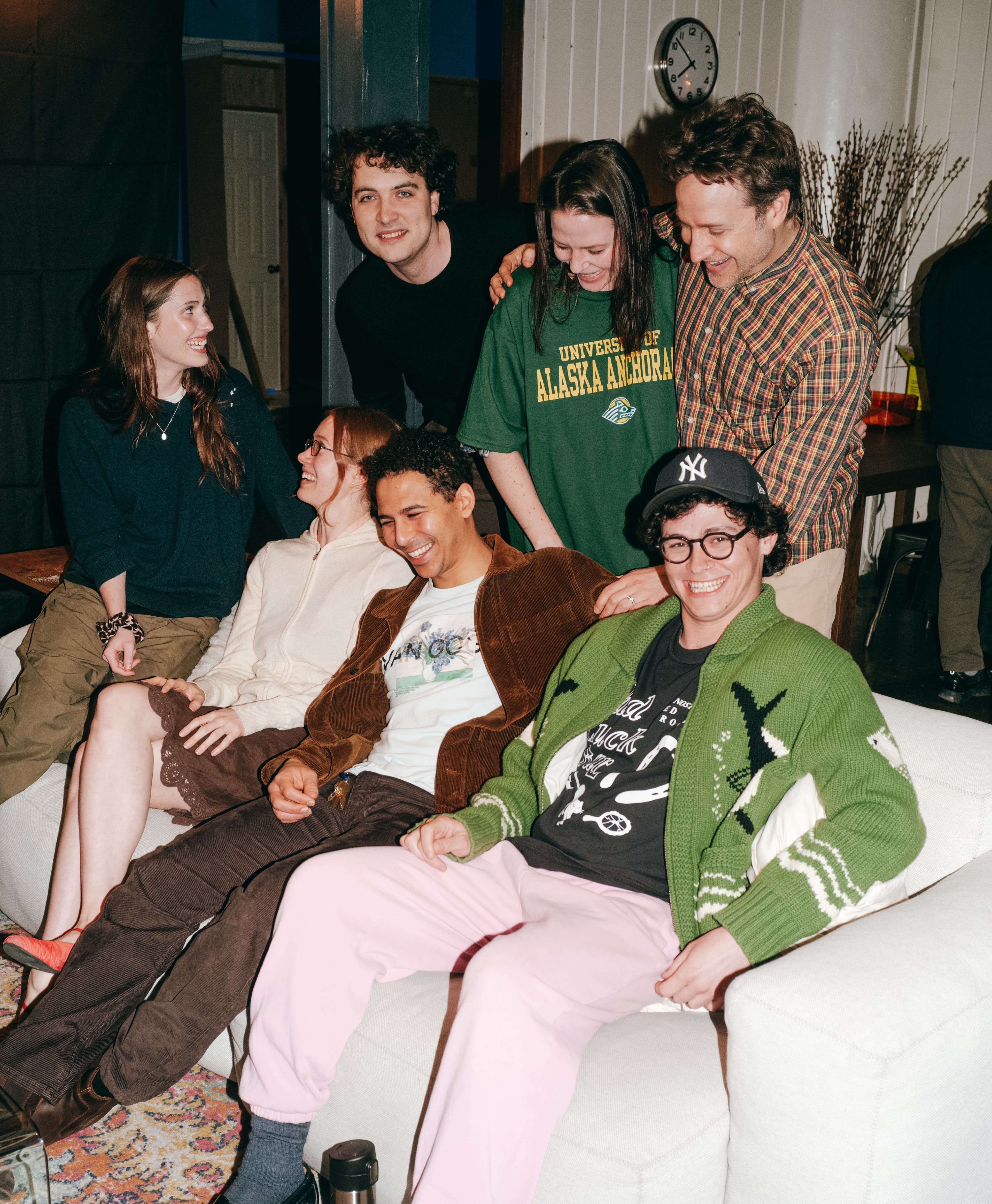
So many people. On a practical level, Sarisha Kurup (our art director and one of our set designers) and Claire Banse (who plays Ruth) were the first two people I asked to be involved. They gave me a lot of confidence to keep going. My other rockstar producers, Sophia Englesberg and Ben Ray, and our set and lighting designer, Nathan Ashany. Our amazing production coordinator, Kaylie Sampson, and design assistant, Maddie Rubin-Charlesworth. And our fearless cast who helped make this play exactly what it is: Ben Michael Brown (Peter), Charlie Sosnick (Hugh), Lizzy Harding (Kim), Natalie Austen (Mary), and Matthew Shehata (Jeremiah).
I also have to thank my family, my amazing girlfriend Lily, the talented people who gave me great notes, and my wonderful support system of friends.
What was the most unexpected obstacle you faced? What was the most expensive?
Personally, the biggest obstacle was self-doubt. The biggest expense by far is our venue rental, but the venue is wonderful (shoutout to Alter Space). We didn’t fundraise for the show, we pre-sold the tickets far enough in advance to know about what we had in the budget. Our show is totally and completely sold out—we’ve had to say no to a lot of people, and that’s been a very unexpected challenge. We’re figuring out what’s next so that maybe more people can see the show.
What are your writing rituals?
Late-night deli iced coffee. Limon Lays. Ice Blue Frost Gatorade. I keep a Twix bar in my freezer, and if I lose momentum, I eat it. I don’t stop writing until I write something that makes me stop, then repeat that three times. I try to fall asleep still writing—I get really good stuff that way.
How did you approach casting the play?
I didn’t audition anyone formally—I had instincts about the people I wanted, who I had met through the natural course of life. Those people all said yes. And I cast two people on the recommendation of actors I’d already cast. Ben Brown (Peter) came for a short read that was somewhat audition-like, but once he started reading, I knew it was him. So we were very lucky all around.
When do you sleep?
Typically, I fall asleep around 1:30 AM and wake up around 8:30 AM. I try to write until I fall asleep, so I wake up to the last thing I wrote.
What’s the most important thing you’d tell an aspiring playwright?
I think we’re all aspiring, just write the play.
What will you do differently next time? What will you keep the same?
We started rehearsing before the script was truly ready. I intend to put another play on in the fall, and I hope to be more prepared and have less change during our pre-production process while also being open to feedback. I put my whole heart into this and didn’t have any expectations. I hope I can do that every time.